

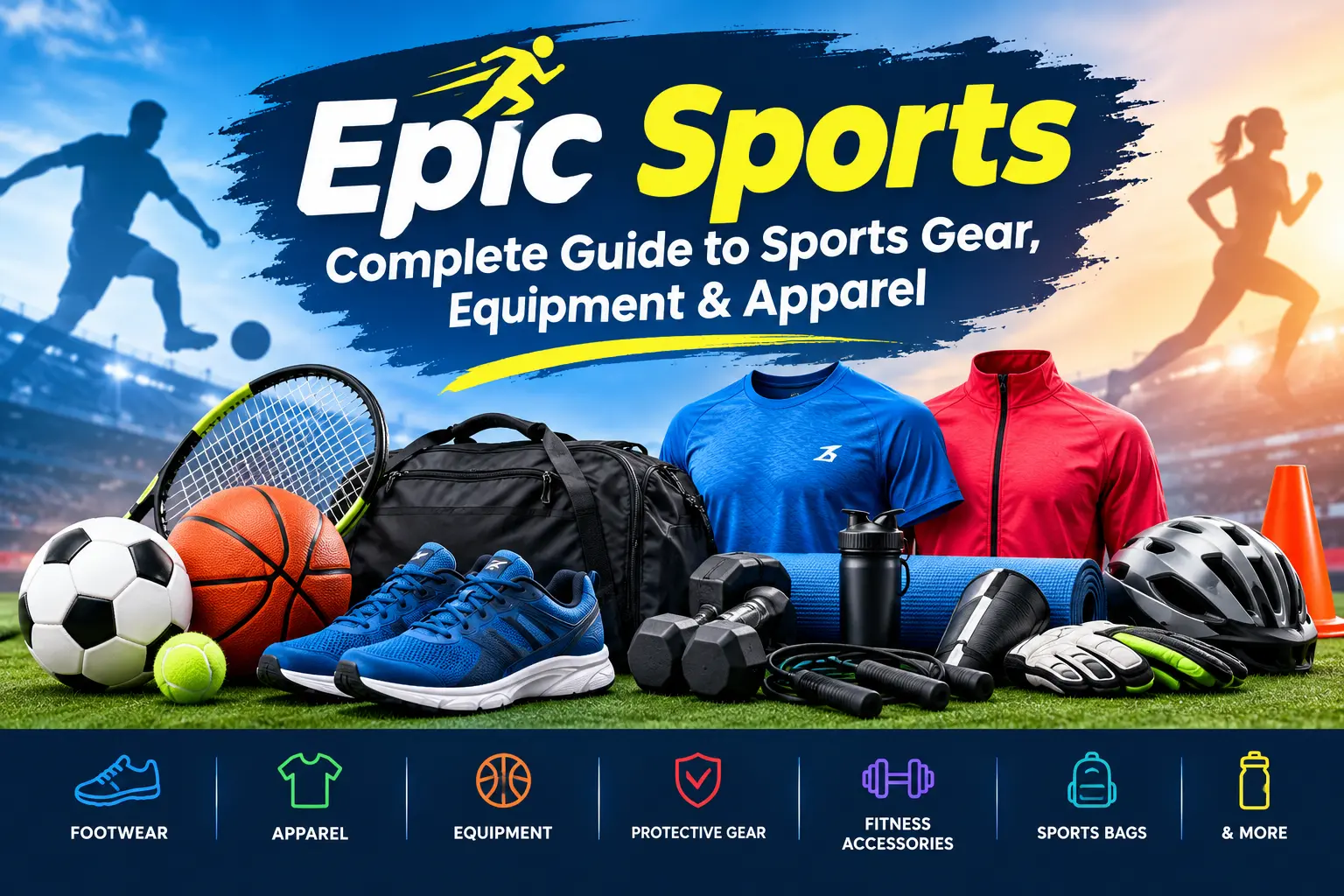
Introduction to Epic Sports
Sports play an important role in maintaining physical fitness, developing discipline, and encouraging an active lifestyle. Whether someone enjoys playing football, basketball, baseball, volleyball, tennis, or another sport, having the right gear can make a significant difference in comfort, safety, and performance. From professional athletes to beginners, everyone benefits from choosing sports equipment and apparel that match their activities and individual needs.
Epic Sports: Complete Guide to Sports Gear, Equipment & Apparel explores the essential products that athletes, fitness enthusiasts, students, coaches, and recreational players may need. It covers sports equipment, athletic clothing, footwear, protective accessories, training essentials, and practical shopping tips to help readers make informed decisions.
Finding suitable sports products is not only about selecting attractive designs or popular brands. It also involves considering product quality, durability, fit, comfort, safety, and value for money. The right combination of these factors can help athletes prepare for training sessions, participate confidently in competitions, and enjoy their favorite activities.
Whether you are building your first sports kit or upgrading equipment for regular practice, this comprehensive guide explains what to look for when choosing sports gear and apparel.
What Is Epic Sports?
Epic Sports is the main topic of this guide, focusing on sports gear, athletic equipment, clothing, footwear, and accessories that support different sporting activities. The term can be used when discussing sports shopping, athletic products, training essentials, and equipment for recreational or competitive use.
Sports gear includes the items people use to participate in physical activities. Depending on the sport, these products may include balls, bats, rackets, gloves, protective padding, training cones, uniforms, shoes, and fitness accessories.
Sports apparel refers to clothing designed for physical activity. Common examples include jerseys, shorts, leggings, tracksuits, compression garments, training shirts, and moisture-managing athletic fabrics.
The best products depend on the activity, the player’s experience, the playing environment, and personal preferences. A football player may prioritize traction and shin protection, while a tennis player may need a suitable racket, comfortable shoes, and lightweight clothing.
Understanding these differences makes it easier to select the right equipment instead of spending money on products that do not meet your requirements.
Why Choosing the Right Sports Gear Matters
Sports equipment and clothing are important parts of preparation for physical activity. Although good gear cannot replace practice, technique, or fitness, suitable products can help athletes feel comfortable and perform their movements more effectively.
1. Comfort During Physical Activity
Comfortable equipment allows athletes to concentrate on their activity instead of constantly adjusting their clothing or accessories. Lightweight fabrics, properly fitted shoes, and ergonomic equipment can improve the overall sporting experience.
For example, breathable shirts may help manage perspiration during intense workouts, while cushioned footwear can provide comfort during running and walking.
2. Better Support for Athletic Performance
Different sports require different movements, skills, and levels of physical effort. Equipment designed for a specific activity can support those requirements.
A tennis racket with an appropriate grip, a basketball with a suitable surface, or running shoes designed for the intended terrain can help athletes use equipment that fits their needs.
3. Safety and Protection
Protective sports gear helps reduce certain risks during physical activities. Helmets, mouthguards, shin guards, knee pads, and other protective items are important in sports where impacts, falls, or collisions may occur.
Choosing properly fitted equipment that meets applicable safety standards is essential. Protective gear can reduce some injury risks, but it cannot eliminate them completely.
4. Durability and Long-Term Value
High-quality equipment can offer better long-term value when it withstands regular use and remains suitable for its intended purpose.
Durability depends on materials, construction, maintenance, and how frequently the product is used. Comparing these factors helps shoppers balance initial cost with expected lifespan.
5. Confidence and Motivation
Wearing comfortable sports apparel and using appropriate equipment can help people feel prepared for practice or competition. A well-organized sports kit can also encourage consistent participation in physical activities.
For beginners, starting with a few essential items is often more practical than purchasing an extensive collection of equipment immediately.
Popular Categories of Sports Equipment
The sports equipment category includes products for individual activities, team sports, indoor games, outdoor recreation, and fitness training. Understanding the main categories helps shoppers identify what they need.
1. Football Equipment
Football requires equipment that supports running, passing, shooting, and teamwork. Essential products commonly include:
- Footballs suitable for the playing surface and age group
- Football boots or turf shoes
- Shin guards
- Football socks
- Jerseys and shorts
- Goalkeeper gloves
- Training cones and markers
The playing surface is particularly important when choosing football footwear. Firm-ground boots, artificial-turf shoes, and indoor football shoes have different sole designs.
Players should select footwear appropriate for their playing conditions and follow competition requirements when applicable.
2. Basketball Equipment
Basketball combines running, jumping, quick direction changes, and ball handling. Suitable equipment can help players train comfortably and safely.
Common basketball products include basketballs, court shoes, jerseys, shorts, socks, and training accessories. Cones, agility ladders, and resistance bands may also be useful during practice.
When choosing basketball shoes, consider fit, traction, ankle comfort, cushioning, and the type of court. A basketball should also match the player’s age group and the competition’s size requirements.
3. Baseball and Softball Equipment
Baseball and softball involve specialized equipment for batting, throwing, catching, and fielding.
Popular products include bats, balls, batting gloves, fielding gloves, helmets, protective cups, catcher equipment, and cleats.
Equipment selection depends on the player’s position, age, league rules, and experience. Young players should use appropriately sized products and equipment that complies with relevant league requirements.
4. Tennis Equipment
Tennis equipment is designed to support racket handling, court movement, and ball control.
Essential tennis products include rackets, tennis balls, court shoes, athletic shirts, shorts, skirts, socks, and racket bags.
Racket weight, grip size, head size, and string tension can influence comfort and playing characteristics. Beginners often benefit from choosing a racket that feels manageable rather than simply selecting the most expensive option.
Tennis footwear should match the court surface whenever possible because different surfaces have different traction requirements.
5. Volleyball Equipment
Volleyball players rely on equipment that supports jumping, landing, serving, and quick movement.
Common items include volleyballs, court shoes, jerseys, shorts, knee pads, socks, and net systems.
Knee pads may provide cushioning during floor contact, while suitable shoes can help with grip and movement on indoor courts. Recreational players should also check that the ball is appropriate for indoor or outdoor play.
6. Running and Track Equipment
Running is accessible to people with different fitness levels, but appropriate footwear and clothing can improve comfort during training.
Popular running products include running shoes, moisture-managing shirts, shorts, leggings, lightweight jackets, running socks, reflective accessories, and hydration products.
Runners should consider distance, running surface, weather, fit, and personal comfort when selecting equipment.
Reflective clothing and lights can improve visibility in low-light conditions. Hydration needs depend on exercise duration, intensity, temperature, and individual requirements.
7. Gym and Fitness Equipment
Fitness equipment supports strength training, flexibility, cardiovascular exercise, and general conditioning.
Common products include dumbbells, resistance bands, exercise mats, kettlebells, skipping ropes, adjustable benches, medicine balls, and foam rollers.
Beginners should select equipment based on their current abilities and available space. Correct technique, gradual progression, and suitable supervision are important when using weights or unfamiliar machines.
Sports Apparel: Clothing for Comfort and Performance
Sports apparel is an essential part of the sports and fitness industry. Athletic clothing is designed to support movement, provide comfort, and suit different environmental conditions.
Unlike ordinary clothing, sportswear often uses fabrics and construction methods intended for repeated movement, perspiration, and frequent washing.
1. Athletic T-Shirts and Training Tops
Athletic T-shirts are popular for gym workouts, running, team practices, and everyday activewear.
When selecting a sports shirt, consider breathability, fit, seam placement, fabric weight, and ease of movement. Moisture-managing synthetic fabrics are common in performance clothing, while some people prefer lightweight natural-fiber blends for lower-intensity activities.
The best option depends on the climate, activity, and personal comfort.
2. Sports Shorts and Leggings
Sports shorts and leggings are designed for activities that involve bending, stretching, running, or jumping.
Important considerations include waistband comfort, fabric flexibility, opacity, length, and freedom of movement.
Running shorts may prioritize lightweight construction, while training leggings often emphasize stretch and coverage. Choose clothing that remains comfortable during the movements associated with your sport.
3. Jerseys and Team Uniforms
Team uniforms help identify players and create a consistent appearance during training and competition.
A typical uniform may include a jersey, shorts, socks, and sport-specific accessories. Depending on the organization, uniforms may feature team colors, player numbers, names, and sponsor logos.
When buying uniforms for a team, consider sizing consistency, fabric durability, printing quality, replacement availability, and delivery schedules.
4. Tracksuits and Training Jackets
Tracksuits and athletic jackets are useful for warm-ups, outdoor activities, travel, and cooler conditions.
Lightweight jackets may provide protection from wind, while insulated options are intended for colder environments. Water-resistant or waterproof construction may be useful in wet conditions, depending on the activity.
Layering clothing allows athletes to adjust their comfort as temperature and exercise intensity change.
5. Compression Clothing
Compression garments include fitted shirts, shorts, leggings, sleeves, and socks.
Some athletes use compression clothing for comfort, warmth, or a close-fitting feel during activity. The effects vary by product and individual, so compression apparel should not be treated as a guaranteed method of improving performance or preventing injuries.
Choose an appropriate fit and avoid garments that cause pain, numbness, or restricted movement.
Sports Footwear: Finding the Right Shoes
Footwear is one of the most important parts of a sports kit because different activities place different demands on the feet.
A shoe designed for running may not provide the traction or lateral support required for court sports. Likewise, football boots are designed around specific playing surfaces and movement patterns.
Running Shoes
Running shoes are designed for repetitive forward movement and come in different styles for road running, trails, and other conditions.
When choosing running shoes, consider:
- Fit around the heel and forefoot
- Comfort during walking and running
- Intended surface
- Cushioning preferences
- Shoe weight and flexibility
- Durability and replacement needs
Whenever possible, try shoes with the socks you normally wear for running. A comfortable fit is generally more useful than choosing a model based only on appearance.
Training Shoes
Training shoes are intended for a range of gym and fitness movements. Depending on the design, they may provide a stable platform for strength exercises and support for lateral movement.
People who participate in several sports may need different footwear for each activity rather than relying on one pair for everything.
Court Shoes
Court shoes are designed for sports such as basketball, tennis, and volleyball. Their soles and construction vary according to the movement patterns and playing surfaces associated with each sport.
Check the manufacturer’s guidance to ensure that the shoes are appropriate for the court you use.
Football Boots and Cleats
Football boots have specialized soles intended for particular playing surfaces. Stud shape, length, and arrangement influence traction.
Using inappropriate boots can affect grip and comfort. Players should select footwear for the field conditions and competition rules rather than assuming one design works everywhere.
Protective Sports Gear and Safety Accessories
Safety should be a priority when choosing sports equipment. The correct protective gear depends on the sport, the level of contact, the player’s age, and the risks associated with the activity.
Helmets
Helmets are essential in several sports and activities, including cycling and certain forms of organized contact sports.
Choose a helmet designed for the specific activity, ensure that it fits correctly, and follow the manufacturer’s instructions. A helmet should be replaced after a significant impact when required by its instructions, even if visible damage is limited.
Shin Guards
Shin guards are commonly used in football and other activities where lower-leg impacts may occur.
A suitable pair should provide appropriate coverage, remain securely positioned, and fit comfortably inside the player’s socks or footwear.
Knee and Elbow Pads
Knee and elbow pads are used in activities such as volleyball, skating, and some recreational sports.
Consider coverage, fit, ventilation, and the type of impact protection provided. Pads should not slide excessively or restrict movement.
Mouthguards
Mouthguards help protect the teeth and oral tissues in sports where facial impacts are possible. Requirements vary by sport and competition.
A properly fitted mouthguard is generally more comfortable to use consistently. Athletes should follow relevant sporting rules and seek professional dental advice when needed.
Sports Support Accessories
Other accessories may include wrist supports, ankle braces, athletic tape, and protective padding.
These products are not interchangeable, and the right choice depends on the intended use. Persistent pain or an existing injury should be assessed by an appropriate healthcare professional rather than managed solely through sports accessories.
Essential Training Accessories for Athletes
Training accessories can help athletes organize practice sessions, develop skills, and monitor their activity.
Resistance Bands
Resistance bands are lightweight and portable. They can be used for mobility exercises, strength training, and warm-up routines.
Different resistance levels suit different exercises and ability levels. Inspect bands regularly for tears or damage before use.
Agility Ladders and Training Cones
Agility ladders and cones are useful for organizing footwork drills, movement exercises, and team practice sessions.
They are relatively easy to transport and can be used on many suitable surfaces. Exercises should be adapted to the participant’s fitness level and coordination.
Skipping Ropes
Skipping ropes are popular for cardiovascular exercise, coordination, and warm-ups.
Choose a rope with a suitable length and handles that are comfortable to hold. Use a safe, non-slip surface with sufficient overhead clearance.
Water Bottles and Hydration Accessories
Reusable water bottles make it easier to carry fluids during workouts and sporting events.
Capacity, leak resistance, cleaning requirements, and portability are useful purchasing considerations. During prolonged or intense exercise, hydration strategies should reflect environmental conditions and individual needs.
Sports Bags
A sports bag helps organize clothing, footwear, towels, and equipment.
Look for appropriate storage compartments, comfortable straps, durable zippers, and materials that are easy to clean. Separate shoe compartments can be particularly useful for keeping dirty footwear away from clean clothing.
How to Choose the Best Sports Gear
Selecting the right products requires more than comparing prices. A thoughtful shopping process can help you identify equipment that matches your sport, experience, budget, and goals.
1. Identify Your Sport and Requirements
Start by listing the activities you participate in regularly.
A runner needs different products from a baseball player or a gym enthusiast. Identify essential items first, then consider accessories that may improve convenience or support additional training needs.
2. Choose the Correct Size
Incorrect sizing can cause discomfort and interfere with movement.
Check size charts, product measurements, and manufacturer recommendations before ordering online. For shoes, consider foot width, toe space, and heel fit. For clothing, compare chest, waist, hip, and inseam measurements where relevant.
3. Compare Materials and Construction
Sports products may use polyester, nylon, cotton blends, rubber, synthetic leather, natural leather, and other materials.
Each material offers different characteristics. Breathable fabrics may suit intense workouts, while reinforced materials can be useful for equipment that experiences repeated friction.
Read product specifications carefully instead of assuming that a particular material is always superior.
4. Set a Realistic Budget
Sports gear is available across a wide range of prices.
Create a budget based on your most important needs. Prioritize essential footwear, required protective equipment, and sport-specific items before buying optional accessories.
More expensive products are not automatically the best choice for every athlete.
5. Check Quality and Durability
Inspect stitching, seams, fasteners, handles, grips, and other construction details where applicable.
For online purchases, read product descriptions, warranty terms, return policies, and credible customer reviews. Check whether replacement parts or compatible accessories are available when needed.
6. Consider Your Skill Level
Beginners generally benefit from straightforward, comfortable equipment that supports learning and regular practice.
Advanced athletes may require specialized specifications suited to their technique or competition rules. However, specialized products should still be selected according to individual needs rather than professional popularity alone.
7. Review Safety Standards
For helmets, protective equipment, and products used in organized competition, check applicable safety certifications and governing-body requirements.
Product labels and manufacturer documentation can help verify intended use. Avoid equipment with unclear safety information or visible damage.
Online Shopping for Sports Gear and Apparel
Online shopping gives consumers access to a broad range of athletic products, sizes, designs, and price points. It can also make comparing specifications easier.
However, shopping online requires careful attention to product details.
Benefits of Online Sports Shopping
Online stores may offer:
- A wide variety of sports categories
- Product specifications and size guides
- Customer ratings and reviews
- Price comparisons across products
- Home delivery and convenient ordering
- Access to specialized equipment
These benefits can make it easier to find products that are not available in nearby physical stores.
Tips for Buying Sports Products Online
Before placing an order, verify the product name, model, size, color, material, and included accessories. Check delivery charges, estimated arrival dates, return eligibility, and warranty information.
Read reviews critically. Look for comments about durability, sizing accuracy, comfort, and actual product use rather than relying only on star ratings.
Buy from reputable sellers and use secure payment methods. Be cautious of unusually low prices, unclear seller details, or product listings that make unrealistic claims.
For products that depend heavily on fit, such as shoes or protective equipment, review the return policy before purchasing.
Sports Gear for Beginners, Professionals, and Teams
Different participants have different requirements, making it useful to select equipment according to experience and intended use.
Sports Gear for Beginners
Beginners should focus on essential equipment that is comfortable, easy to use, and appropriate for learning basic skills.
A new runner might start with suitable running shoes, comfortable clothing, and a water bottle. Someone beginning football may need boots, shin guards, socks, and a properly sized ball.
Purchasing a small, practical kit helps reduce unnecessary spending while allowing beginners to discover their preferences.
Sports Gear for Experienced Athletes
Experienced athletes may look for equipment with specific performance characteristics, construction details, or competition-approved specifications.
Examples include rackets with particular grip sizes, running shoes suited to specific training needs, and specialized protective gear.
Experienced players should evaluate products according to their training requirements, comfort, and feedback from qualified coaches when appropriate.
Sports Equipment for Schools and Teams
Schools, sports academies, and community organizations often need multiple products in different sizes.
When purchasing in bulk, consider durability, storage, maintenance, replacement availability, and compliance with applicable safety standards.
Creating an inventory can help teams track equipment condition, identify missing items, and plan future purchases. Ordering samples before committing to a large uniform purchase may also help verify sizing and material quality.
Caring for Sports Equipment and Apparel
Proper maintenance helps keep sports gear clean, functional, and ready for use.
Clean Sports Clothing Correctly
Follow garment care labels and separate heavily soiled clothing when appropriate. Allow damp apparel to dry before storing it, and avoid washing methods that may damage technical fabrics or printed designs.
Regular washing helps remove sweat and dirt, while proper drying reduces unpleasant odors.
Store Equipment Properly
Keep sports equipment in a clean, dry location away from excessive heat and direct sunlight when these conditions could damage the materials.
Store balls, rackets, protective equipment, and footwear according to manufacturer recommendations. Avoid leaving equipment in damp bags for extended periods.
Inspect Gear Regularly
Check products for loose stitching, damaged straps, worn soles, cracks, and other signs of deterioration.
Protective equipment deserves particular attention because damage may affect its ability to provide protection. Replace items when necessary and follow any manufacturer-specific inspection or replacement guidance.
Maintain Sports Footwear
Remove loose dirt after use and allow shoes to dry naturally. Follow the manufacturer’s cleaning instructions, especially for specialized materials.
Replace footwear when wear affects comfort, traction, stability, or suitability for the intended activity.
Trends in Sports Gear and Athletic Apparel
The sports industry continues to develop new products, materials, and designs in response to changing consumer preferences.
Performance-Oriented Fabrics
Many athletic garments use lightweight materials designed to manage moisture, improve ventilation, and allow movement.
Different fabrics suit different activities, and shoppers should compare garment specifications with their intended use.
Comfortable Everyday Activewear
Athletic clothing has become popular beyond gyms and sports fields. Tracksuits, sports T-shirts, leggings, and training shoes are commonly worn for travel, casual outings, and everyday activities.
This trend has increased interest in clothing that combines functionality with versatile designs.
Wearable Fitness Technology
Fitness watches, heart-rate monitors, and activity trackers can help users monitor selected exercise metrics.
These products vary in accuracy and functionality. They are best treated as tools for tracking activity rather than substitutes for professional medical advice or individualized coaching.
Durable and More Sustainable Materials
Some sports manufacturers are exploring recycled materials, longer-lasting product designs, and improved manufacturing practices.
Consumers interested in sustainability can review material disclosures, repair options, durability information, and credible environmental certifications.
Claims about environmental benefits should be assessed carefully because sustainability varies by product and manufacturing process.
Common Mistakes to Avoid When Buying Sports Gear
Avoiding a few common mistakes can help you spend more effectively.
Choosing products based only on price: Low-cost equipment may offer good value, but quality and suitability should also be considered.
Ignoring fit: Poorly fitted shoes, clothing, and protective equipment can create discomfort and interfere with movement.
Buying equipment for the wrong sport: Products designed for one activity may not meet the traction, protection, or performance requirements of another.
Overlooking safety requirements: Some sports require specific protective equipment or approved product specifications. Check the relevant rules before buying.
Following trends without checking your needs: Popular colors and designs may be attractive, but functionality should remain a priority.
Ignoring maintenance: Even good-quality equipment can deteriorate quickly when it is stored incorrectly or not cleaned regularly.
Buying unnecessary accessories: Start with essential items and add products when they provide a clear benefit to your activity.
Frequently Asked Questions About Epic Sports
What does Epic Sports mean?
Epic Sports is the central topic of this guide, covering sports gear, equipment, athletic apparel, footwear, and accessories used for fitness, training, recreation, and competition. The phrase may also refer to a specific business or brand, depending on the context in which it is used.
What sports equipment should beginners buy first?
Beginners should purchase equipment based on their chosen activity. Essential items may include suitable footwear, comfortable athletic clothing, required protective gear, and basic sport-specific equipment.
How do I choose the right sports apparel?
Consider comfort, fit, fabric, breathability, freedom of movement, weather conditions, and care instructions. Select apparel designed for your activity and personal preferences.
Is expensive sports equipment always better?
No. Price alone does not determine whether a product is suitable. The best choice depends on quality, durability, safety, fit, intended use, and budget.
What is the difference between sports gear and sports apparel?
Sports gear is a broad category that includes equipment, footwear, accessories, and protective products. Sports apparel specifically refers to clothing designed for athletic activities, such as jerseys, shorts, leggings, and training shirts.
How often should sports equipment be replaced?
Replacement schedules vary by product, frequency of use, maintenance, and condition. Replace damaged protective equipment promptly and follow manufacturer recommendations for inspection and replacement.
Can I buy sports equipment online?
Yes. Online shopping can provide access to a wide range of sports products. Before ordering, verify specifications, sizing, seller credibility, delivery terms, warranty coverage, and return policies.
How can I maintain sports gear?
Clean items according to manufacturer instructions, dry them properly, store them in suitable conditions, and inspect them regularly for wear or damage.
What sports apparel is suitable for workouts?
Comfortable clothing that allows movement and manages moisture can suit many workouts. The best choice depends on exercise intensity, weather, personal comfort, and the activity being performed.
Why is protective sports equipment important?
Protective equipment helps reduce certain injury risks associated with impacts, falls, and collisions. Proper fit, appropriate use, and compliance with safety requirements are essential.
Conclusion
Epic Sports: Complete Guide to Sports Gear, Equipment & Apparel provides an overview of the products that support athletes, beginners, fitness enthusiasts, and sports teams. From football equipment and basketball shoes to running apparel, protective accessories, and gym essentials, the right choices depend on individual needs and sporting goals.
When selecting sports products, prioritize comfort, correct sizing, durability, safety, and value for money. Compare specifications, read product reviews carefully, and purchase equipment that matches your activity and experience level.
Maintaining your sports gear is equally important. Regular cleaning, proper storage, and timely replacement can help keep equipment in suitable condition.
