

Introduction
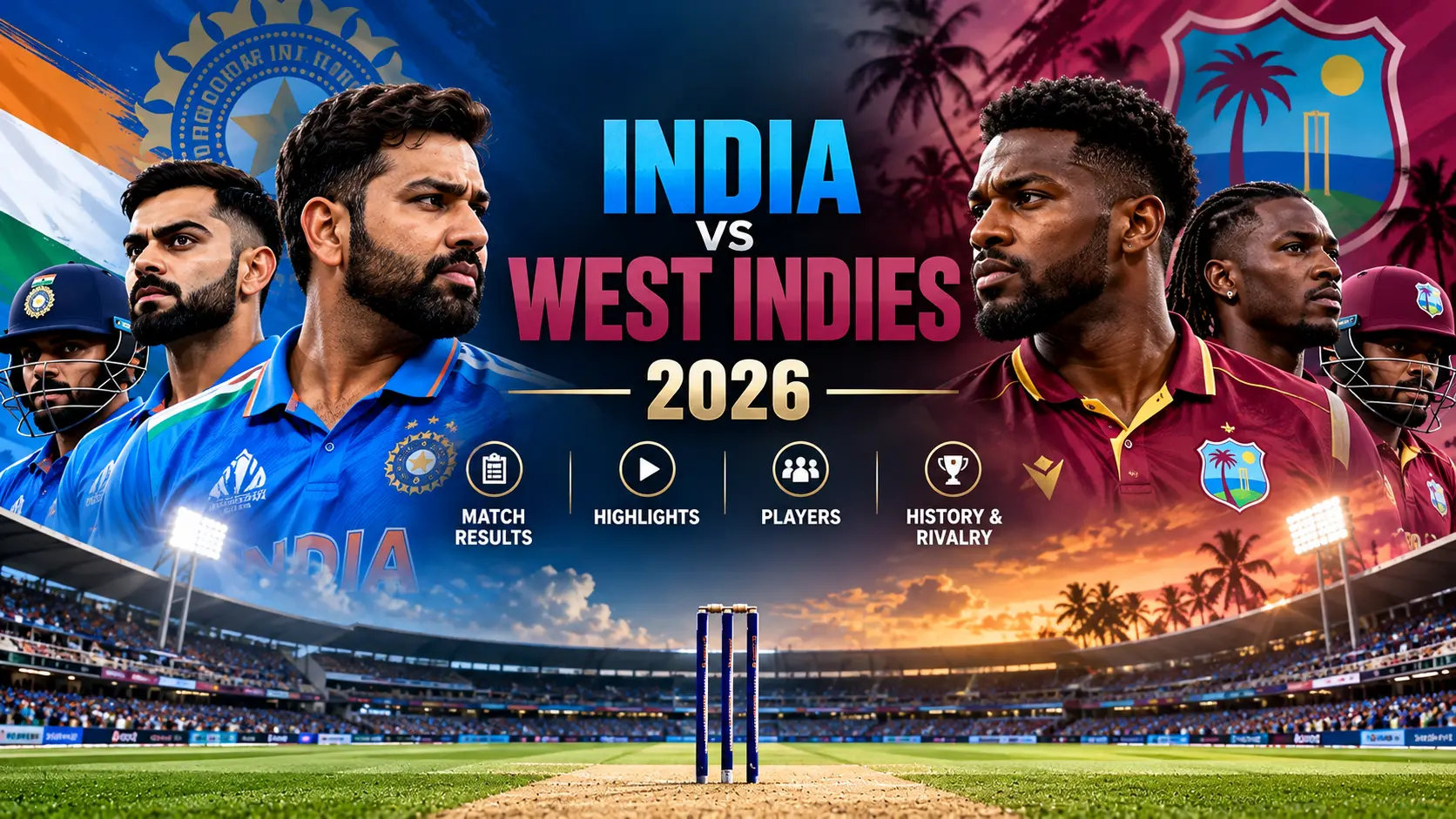
Cricket IND vs WI is a popular search phrase among cricket fans looking for India versus West Indies match results, scorecards, fixtures, player performances, and match analysis. The two teams have a long history of international cricket, producing memorable contests across One Day Internationals (ODIs), Twenty20 Internationals (T20Is), and Test matches.
India are known for their strong batting resources, spin options, and depth across formats. West Indies bring a proud cricketing tradition, explosive batting, powerful hitting, and a history of success in international competitions. When these teams meet, their contrasting strengths can create exciting matches and unpredictable results.
The latest men’s white-ball series between India and West Indies in India took place from September 27 to October 17, 2026. It included three ODIs followed by five T20Is. India won the ODI series 2–1, while the T20I series ended level at 2–2 after the final match was abandoned without a result because of rain. ICC’s official series coverage provides further information about the T20I outcome.
This article covers the 2026 results, memorable performances, team strengths, key players, the history of the rivalry, differences between match formats, and ways to follow future IND vs WI fixtures.
Whether you are a regular cricket follower or a casual fan searching for the meaning of IND vs WI, this guide provides an overview of the rivalry and explains where to find reliable match information.
What Does Cricket IND vs WI Mean?
The phrase Cricket IND vs WI is shorthand for a cricket match between India and West Indies.
- IND is the commonly used abbreviation for India in international cricket scorecards.
- WI is the commonly used abbreviation for West Indies.
- IND vs WI identifies a fixture or contest between the two teams.
The keyword can refer to an upcoming match, a completed fixture, a live score, a team comparison, or a historical series. Its meaning depends on the user’s search intent.
For example, a person searching for “IND vs WI live score” probably wants a current scorecard. Someone searching for “IND vs WI 2026 results” is more likely to want completed match results, while a search for “India vs West Indies head-to-head” suggests an interest in historical statistics.
For website owners, understanding these differences helps create content that answers readers’ questions instead of simply repeating the same keyword.
Why Is IND vs WI a Popular Cricket Search?
India has a large cricket audience, and West Indies remains an important international cricket team with a distinct playing tradition. Matches between the two sides can attract attention because of their history, major players, and contrasting approaches to batting and bowling.
ODIs often involve strategic innings building over 50 overs, while T20Is reward quick scoring, adaptable bowling, and effective fielding under time pressure.
Fans also search for team announcements, playing XIs, venue details, toss updates, match summaries, and individual player statistics. These searches make IND vs WI a useful keyword for cricket news and informational articles.
India vs West Indies 2026 Series Overview
The 2026 home series gave India and West Indies opportunities to compete in both ODI and T20I cricket.
According to the International Cricket Council’s announcement, the tour consisted of three ODIs and five T20Is. The first ODI was scheduled for September 27, followed by the T20I leg beginning on October 6. The ICC’s series announcement includes the original schedule and squad information.
The ODI series featured high-scoring contests, including a major run chase in Guwahati. The T20I series was more evenly balanced, with each side winning two completed matches before rain prevented a result in the fifth game.
2026 ODI Series Results
| Match | Date | Result |
|---|---|---|
| 1st ODI | September 27, 2026 | India won by 8 wickets |
| 2nd ODI | September 30, 2026 | India won by 8 wickets |
| 3rd ODI | October 3, 2026 | West Indies won by 5 wickets |
India won the three-match ODI series 2–1.
The second ODI was particularly memorable because India successfully chased 406 runs, while the third ODI showed that West Indies could respond strongly after losing the first two matches. The scorecards are available through Cricbuzz’s 2026 series page.
2026 T20I Series Results
| Match | Date | Result |
|---|---|---|
| 1st T20I | October 6, 2026 | India won by 8 wickets |
| 2nd T20I | October 9, 2026 | West Indies won by 6 wickets |
| 3rd T20I | October 11, 2026 | India won by 14 runs |
| 4th T20I | October 14, 2026 | West Indies won by 24 runs |
| 5th T20I | October 17, 2026 | No result due to rain |
The T20I series finished 2–2, with the fifth match abandoned after a rain delay. Neither team won the series outright. The ICC’s official report confirms the final outcome.
IND vs WI ODI Series: Match-by-Match Review
The ODI series demonstrated how quickly a cricket match can change when a batting side builds a large total or a chasing team maintains a high scoring rate.
First ODI: India Won by Eight Wickets
The first ODI took place on September 27, 2026, in Thiruvananthapuram.
West Indies scored 295/7 in 50 overs. India responded with 300/2 in 41.4 overs, winning by eight wickets.
India’s successful chase showed the value of a steady start and the ability to maintain scoring pressure without losing too many wickets. Chasing a target requires batters to balance the need for runs with the importance of preserving wickets.
West Indies managed to reach a competitive total, but India controlled the chase and reached the target comfortably.
The result gave India an early advantage in the series and placed pressure on West Indies to respond in the next match.
Second ODI: India Completed a Historic 406-Run Chase
The second ODI in Guwahati on September 30 was one of the most remarkable matches of the series.
West Indies scored 405/7 in 50 overs, with several batters producing centuries. India replied with 406/2 in 43.3 overs to win by eight wickets.
Shubman Gill scored an unbeaten 223 from 133 balls, while Rohit Sharma made 101. Their opening partnership provided the foundation for the chase. Gill’s innings was especially notable because India reached a target of more than 400 runs with overs remaining. The ICC match report and scorecard provide detailed figures from the game.
The contest illustrated how a very large total does not guarantee victory in ODI cricket. Batting conditions, partnerships, wicket preservation, and the ability to sustain a high run rate can all influence the outcome.
West Indies also demonstrated considerable batting strength by crossing 400. However, its bowling attack could not take enough wickets to stop India’s pursuit.
For fans searching for IND vs WI match highlights, this game is a key example of the series’ high-scoring drama.
Third ODI: West Indies Responded Strongly
The third ODI was played on October 3, 2026, in New Chandigarh.
India posted 351/7 in 50 overs. West Indies chased the target successfully, scoring 352/5 in 48.2 overs to win by five wickets.
The result prevented an Indian sweep of the ODI series and gave West Indies a positive finish. It also showed the importance of recovery after losing the first two matches.
A successful chase of this size generally requires a combination of partnerships, effective shot selection, and careful management of the required run rate. West Indies managed the chase well enough to reach the target with wickets remaining.
Although India had already secured the series, the final ODI gave West Indies momentum heading into the T20I leg.
IND vs WI T20I Series: A Closely Contested Battle
T20 cricket places a greater emphasis on scoring quickly, using the powerplay effectively, and selecting bowling variations that restrict the opposition.
The 2026 T20I series between India and West Indies was closely contested. India won the first and third matches, while West Indies won the second and fourth. Rain then prevented the final game from producing a result.
First T20I: India Won by Eight Wickets
The first T20I took place in Lucknow on October 6, 2026.
West Indies were dismissed for 171 in 19.1 overs. India reached 172/2 in 14.4 overs to win by eight wickets.
India’s chase was completed with considerable time remaining. The result gave the home side an early lead in the T20I series.
A successful T20 chase often depends on using the powerplay effectively, avoiding unnecessary wickets, and identifying the right opportunities to accelerate. India’s performance put pressure on West Indies ahead of the second match.
Second T20I: West Indies Won by Six Wickets
The second T20I took place in Ranchi on October 9.
India scored 249/5 in 20 overs, setting West Indies a demanding target. West Indies reached 252/4 in 18.3 overs to win by six wickets.
The result was an example of how a high total can still be chased in T20 cricket when the chasing team sustains an exceptional scoring rate.
India’s 249 was a substantial score, but West Indies found a way to finish the chase. The victory levelled the series and demonstrated the visitors’ ability to produce an aggressive batting performance under pressure.
Third T20I: India Won by 14 Runs
The third T20I was played in Indore on October 11.
India scored 223 in 20 overs. West Indies replied with 209/7, giving India a 14-run victory.
Unlike the previous match, in which the chasing side reached its target, this contest highlighted the importance of defending a high total.
Defending a score requires bowlers to combine wicket-taking opportunities with control over scoring. Fielding, death-over execution, and the timing of bowling changes can also influence the result.
India’s win put the home team ahead in the series once again.
Fourth T20I: West Indies Won by 24 Runs
The fourth T20I took place in Hyderabad on October 14.
West Indies scored 247/3 in 20 overs. India were dismissed for 223 in 19.3 overs, resulting in a 24-run victory for West Indies.
Shai Hope scored 102 from 50 balls, producing one of the most notable individual performances of the T20I series. The ICC’s official match page records his innings and the match result.
India’s chase included several contributions, but West Indies maintained enough pressure to secure the victory. The result levelled the series at 2–2 and set up a decisive final match.
Fifth T20I: Rain Prevented a Decisive Result
The fifth T20I was scheduled for October 17 in Bengaluru.
After delays caused by rain, the match began under a shortened format. India had reached 118/5 in 7.4 overs when the game was abandoned without a result.
As a result, the T20I series finished level at 2–2. The final match did not produce a winner, so neither team could claim the series outright.
The International Cricket Council reported that Shai Hope finished as the leading run-scorer across both teams in the T20I series, with 261 runs at an average of 130.5 in four innings. He was named Player of the Series. Keemo Paul was the leading wicket-taker, with eight wickets from three games. Read the ICC series report.
Key Players in India vs West Indies Cricket
Individual performances often shape the story of an IND vs WI series. Batters can change a match with a long innings or a short burst of aggressive scoring, while bowlers can turn the contest by taking wickets at important moments.
The following players were among the notable names associated with the 2026 series. Their inclusion reflects the reported performances and squad information for this tour, not a prediction about future selections.
Shubman Gill
Shubman Gill’s unbeaten 223 in the second ODI was a defining performance of the series. His innings helped India complete the 406-run chase and secure the ODI series.
Gill’s performance demonstrated the value of maintaining concentration over a long innings while continuing to score quickly. A batter chasing a large total must judge when to preserve wickets and when to accelerate.
His ODI innings was also a reminder that a successful run chase depends on partnerships rather than one isolated contribution alone.
Rohit Sharma
Rohit Sharma scored 101 in the second ODI and shared a major opening partnership with Gill.
His role in building the foundation of the chase illustrated the importance of experienced top-order batting. An opening partnership can reduce the pressure on the middle order and allow the team to maintain a strong scoring rate.
Shai Hope
Shai Hope was one of the leading performers for West Indies during the T20I series. He scored 102 in the fourth T20I and finished as the highest run-scorer across both teams in the series, according to the ICC.
His performance highlighted the importance of consistency and the ability to combine timing with power. Hope’s contribution also helped West Indies level the series before the final match.
Rohit Sharma and Virat Kohli
Both Rohit Sharma and Virat Kohli remain important names in India’s ODI history. Their experience and batting styles have helped shape India’s approach to the format over many years.
However, squad selection can change between tours and formats. Readers should always check the official squad announcement before assuming either player will feature in a future IND vs WI fixture.
India’s Bowling Options
India’s bowling combinations can include pace, spin, and all-round options, depending on conditions and format.
In ODIs, bowlers need to balance control with wicket-taking opportunities over a longer innings. In T20Is, they must often respond to rapid changes in scoring momentum.
The best bowling combination depends on the pitch, weather, opposition batters, and availability of players.
West Indies’ Batting Strength
West Indies have a long history of powerful batting and aggressive stroke play. Their 2026 series included several high-scoring performances, demonstrating that their batting lineup could challenge India’s bowling attack.
The 405-run ODI total and the successful chase of 250-plus in the second T20I were examples of their potential to score quickly.
However, batting strength alone does not guarantee a series victory. Teams also need effective bowling, fielding, and tactical consistency.
India vs West Indies Head-to-Head: What Should Fans Know?
The head-to-head record between India and West Indies depends on the format being considered.
Test cricket, ODIs, and T20Is have different histories, match totals, and competitive contexts. A single combined record can therefore be misleading unless the formats are clearly identified.
For example, India and West Indies have met in major international tournaments, bilateral series, and matches played in different countries. Home conditions, pitch types, squad selection, and era-specific rules can all influence results.
ODI Rivalry
The ODI format has produced many memorable India–West Indies encounters. The 2026 series added another high-scoring chapter, with India winning two matches and West Indies winning one.
The second ODI was particularly remarkable because India successfully chased 406. The third ODI then showed West Indies’ ability to respond by chasing 352.
These games demonstrated that modern ODI cricket can involve very high scoring rates and successful chases that would once have seemed extremely difficult.
T20I Rivalry
T20I cricket creates a different competitive environment. Teams have fewer overs to build an innings, so batters often need to attack earlier and bowlers must adapt quickly.
The 2026 series finished 2–2, with the fifth match producing no result. That outcome reflected the balance between the teams across the four completed games.
The series also showed how quickly momentum can change: India won the first match, West Indies won the second, India won the third, and West Indies won the fourth.
Why Historical Statistics Need Context
When publishing an IND vs WI head-to-head article, always specify the format and the date on which the statistics were checked.
For example, an ODI record should not be combined with T20I results without a clear explanation. Historical records also change when new matches are completed.
For accurate numbers, use an official cricket database or a reputable scorecard service and verify the latest figures before publication.
Difference Between IND vs WI ODI and T20 Matches
Although both formats involve the same teams, they require different approaches.
Match Duration
ODIs are played over a maximum of 50 overs per side. T20Is are played over a maximum of 20 overs per side.
The longer ODI format allows teams more time to rebuild after losing wickets. In T20Is, the need to score quickly often creates greater pressure to take calculated risks.
Batting Strategy
In ODIs, a batter may begin cautiously and accelerate after settling in. Partnerships can be built over a longer period, and teams can adjust their plans during the innings.
In T20Is, the available overs are limited. Batters often aim to take advantage of the powerplay and maintain a high scoring rate throughout the innings.
The 2026 series illustrated both approaches. The ODI matches included totals above 350 and a 406-run chase, while the T20Is featured rapid scoring and several large totals.
Bowling Strategy
ODI bowlers have more overs available to create pressure over time. They can use changes in pace, field settings, and bowling combinations to limit scoring and take wickets.
T20I bowlers have fewer opportunities to recover from an expensive over. Yorkers, slower balls, spin variations, and carefully planned matchups may become especially important.
Importance of Fielding
Fielding matters in every format, but its effect can be particularly visible in T20Is, where a single boundary saved or a missed catch can significantly influence a close result.
In ODIs, fielding also affects the accumulation of runs over a longer innings and can help build pressure through dot balls.
How to Follow IND vs WI Live Scores and Results
Fans searching for IND vs WI live scores should use reliable cricket sources that update scorecards and match information.
Official ICC Website
The International Cricket Council website provides official international cricket news, fixtures, match pages, and selected scorecards.
It is a useful starting point for checking tournament information and reports on international matches.
BCCI Website
The Board of Control for Cricket in India publishes Indian team announcements, fixtures, squad information, and other official updates.
Use the official announcement when verifying the availability of Indian players or confirming a scheduled match.
Cricbuzz
Cricbuzz provides scorecards, commentary, fixtures, and cricket news.
Its series pages can be useful for reviewing previous IND vs WI matches and checking upcoming fixtures.
ESPNcricinfo
ESPNcricinfo offers cricket scorecards, statistics, match reports, and historical coverage.
Its archives are useful when researching the long-term India–West Indies rivalry.
Confirm Dates and Time Zones
A match may be listed in local venue time, Indian Standard Time, or the time zone used by an international website.
Always check the date and time zone displayed on the source. Match timings may also change because of weather, scheduling decisions, or other circumstances.
The 2026 series has concluded, so future IND vs WI dates should be checked against a current official schedule rather than inferred from the previous tour.
What Makes India vs West Indies Cricket Exciting?
Several factors contribute to the appeal of this rivalry.
Contrasting Batting Styles
India’s batting approach can combine technical consistency, controlled aggression, and depth through the order. West Indies have a tradition of powerful hitting and attacking cricket.
These general descriptions are not absolute rules. Both teams can adapt their strategies depending on the opposition and conditions.
High-Scoring Possibilities
The 2026 ODI series included totals of 405 and 406 in the second match, followed by a successful West Indies chase of 352 in the third.
Such results demonstrate how modern batting methods and favourable conditions can create exceptionally high scores.
Different Match Conditions
India hosts international cricket at venues with different pitch characteristics, boundary dimensions, weather conditions, and levels of dew.
These factors can influence team selection and strategy. A venue that rewards spin may require a different bowling combination from a surface that favours pace or offers consistent bounce.
Changing Match Momentum
Cricket can change quickly. A partnership may put one team in control, while a few wickets can shift the balance.
The 2026 T20I series was a clear example of this pattern, with the two sides exchanging victories before the final match was abandoned.
International Rivalry and History
India and West Indies have competed across multiple eras of international cricket. Historical achievements and the development of new players give each series a wider context than its individual results.
Fans can enjoy the current contest while also learning how the rivalry has evolved.
Team Strengths and Areas to Watch
An informed match analysis considers more than reputation. Batting form, bowling depth, fielding, fitness, conditions, and team selection all affect a team’s chances.
India’s Potential Strengths
India can draw on a broad pool of batters, pace bowlers, spinners, and all-rounders.
In ODIs, batting depth can help a team recover from early wickets or build a large total. In T20Is, the ability to attack during the powerplay and finish strongly can be important.
However, a strong squad does not guarantee victory. Teams still need to adapt to the conditions and execute their plans.
West Indies’ Potential Strengths
West Indies can produce explosive batting performances and apply pressure through aggressive stroke play.
The 2026 series showed that the side could score heavily in both ODIs and T20Is. Its successful chase of 352 in the third ODI and its victory in the second T20I were important examples.
For West Indies, consistency across batting, bowling, and fielding remains essential when competing in a full series.
The Importance of Bowling Depth
A team may have a powerful batting lineup but still struggle if it cannot take wickets or control the scoring rate.
ODI bowling requires patience and the ability to create pressure over a long innings. T20I bowling requires precise execution in a shorter period.
The balance between specialist bowlers and all-rounders is therefore a major factor in team selection.
Conditions and Toss
The toss can influence strategy, especially when the pitch changes during a match or dew affects the ball later in the evening.
However, winning the toss does not guarantee success. Teams still need to perform with both bat and ball.
Match analysis should consider conditions alongside team quality rather than treating the toss as the sole explanation for a result.
IND vs WI: How to Write an Accurate Match Preview
If you are publishing a separate preview for a future India vs West Indies match, avoid simply copying a previous scorecard and changing the date.
A useful preview should include the following elements.
Confirmed Fixture Details
Check the date, start time, venue, match format, and series name from a current official source.
Do not describe a match as upcoming unless it has not yet taken place.
Latest Squad Announcements
Use official team announcements to confirm the selected players. Do not assume that a player from a previous series will be available for the next one.
Injuries, workload management, retirement, and selection decisions can change a squad.
Recent Form
Review recent match results and individual performances. Explain whether a statistic applies to the current format and whether it covers a small sample or a longer period.
Pitch and Weather
Use credible venue and weather information when available. Avoid claiming that a pitch will favour a particular team without reliable evidence.
Expected Matchups
Discuss how batting styles might compare with bowling options, but distinguish analysis from fact. A matchup that worked in one game may not determine the outcome of the next.
Probable Playing XI
If you include a probable XI, label it clearly as a prediction and update it when official team sheets are released.
Never present a predicted lineup as confirmed information.
Frequently Asked Questions About Cricket IND vs WI
1. What does IND vs WI mean in cricket?
IND vs WI is the standard shorthand for a cricket match between India and West Indies. The phrase may refer to an ODI, T20I, Test match, or another international fixture.
2. What were the India vs West Indies results in 2026?
India won the ODI series 2–1. The T20I series finished 2–2, with the fifth and final T20I abandoned without a result because of rain.
3. Who won the IND vs WI ODI series in 2026?
India won the three-match ODI series after victories in the first and second matches. West Indies won the third ODI.
4. Who won the IND vs WI T20I series in 2026?
Neither team won the series outright. India and West Indies each won two completed matches, and the final match produced no result.
5. What was special about the second ODI in 2026?
West Indies scored 405/7, and India successfully chased 406/2. Shubman Gill scored an unbeaten 223, while Rohit Sharma made 101.
6. Who was the leading run-scorer in the 2026 T20I series?
According to the ICC’s series report, West Indies captain Shai Hope scored 261 runs across four innings and was named Player of the Series.
7. Why was the fifth T20I abandoned?
Rain delayed the match, and play was eventually abandoned without a result after India had reached 118/5 in 7.4 overs.
8. Where can I find the IND vs WI live score?
Use reputable cricket services such as the ICC website, BCCI website, Cricbuzz, or ESPNcricinfo. Check that the scorecard matches the correct format and fixture.
9. How can I check the next IND vs WI match?
Consult a current official fixture list or a reputable cricket schedule service. Do not assume that the next match date is known from the previous series schedule.
10. Are India and West Indies strong in both ODI and T20 cricket?
Both teams have competitive records and different strengths, but results depend on the format, squad, conditions, and current form. The 2026 series showed India winning the ODIs while the T20Is ended level.
11. Why do IND vs WI matches sometimes have high scores?
Scoring can be influenced by pitch conditions, boundary size, batting quality, bowling execution, and weather. The 2026 series included several high totals, but not every match between the teams will follow the same pattern.
12. Is IND vs WI a good keyword for a cricket blog?
It can be useful because it relates to several search intents, including scores, fixtures, results, player analysis, and head-to-head statistics. A strong article should clearly identify whether it covers a current match, a completed series, or historical information.
Conclusion
Cricket IND vs WI remains a compelling topic for fans interested in international cricket, match results, team performances, and player achievements. The 2026 series in India provided high-scoring ODI matches and a closely contested T20I series.
India won the ODI series 2–1, including a remarkable chase of 406 in Guwahati. West Indies secured a victory in the third ODI and competed strongly in the T20I leg. The T20I series ended 2–2 after rain prevented the final match from producing a result.
These outcomes highlight the importance of partnerships, batting depth, bowling execution, fielding, and adaptability across formats. They also demonstrate why scorecards and current official sources are essential when reporting cricket results.
For readers following IND vs WI, the best approach is to verify fixtures, results, team announcements, and player statistics through reliable cricket sources. For publishers, the keyword offers opportunities to cover live scores, completed matches, team comparisons, and the wider history of the rivalry.
